


The Last Riddle
The Last Riddle
Advice on Living and Dying Well from the Imprisoned Saint Thomas More
Couldn't load pickup availability
In July of 1535, the English statesman and writer Thomas More was brought to trial, found guilty of malicious treason against King Henry VIII, and beheaded. “I die the King’s good servant,” he declared in his final words, “and God’s first.” But in the course of his fifteen-month imprisonment in the Tower of London, this “man for all seasons”—now facing a final riddle of how “a man may lose his head and have no harm”—wrote a collection of letters, instructions, and prayers to family and friends. In this exquisitely written book, More scholar Stephen Smith guides readers through these powerful meditations on duty, virtue, friendship, conscience, and the ultimate questions of life and death.
More Info
More Info
Share
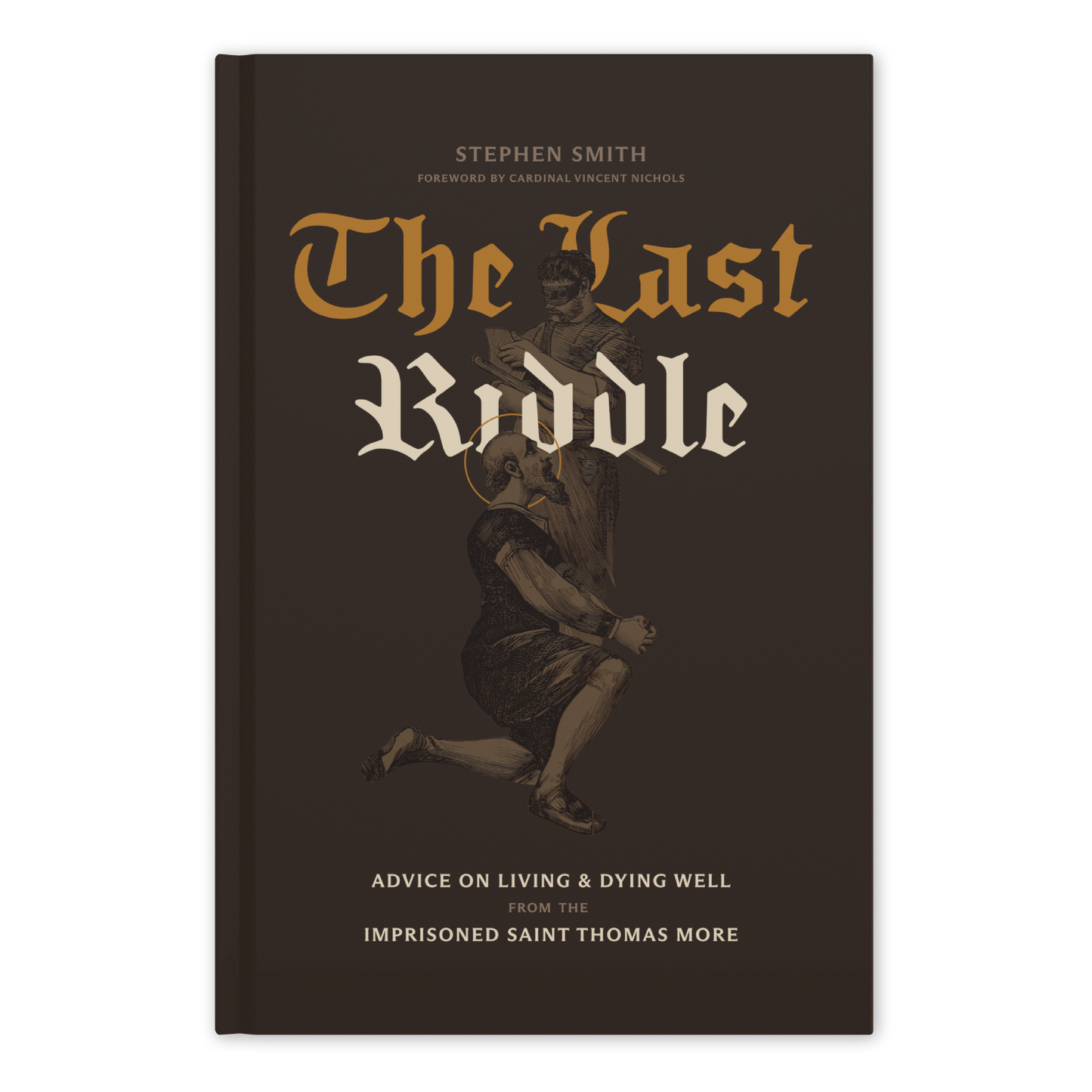
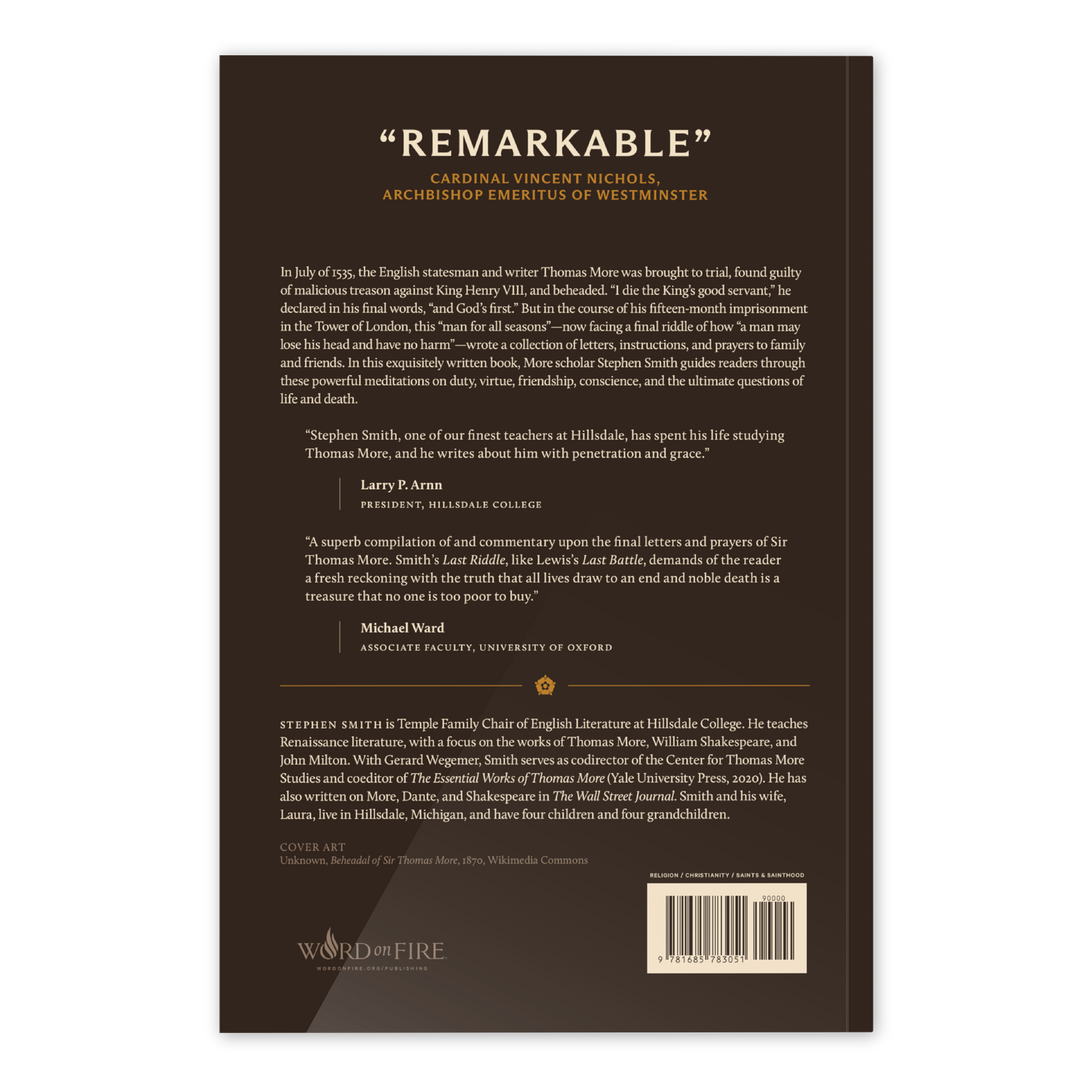
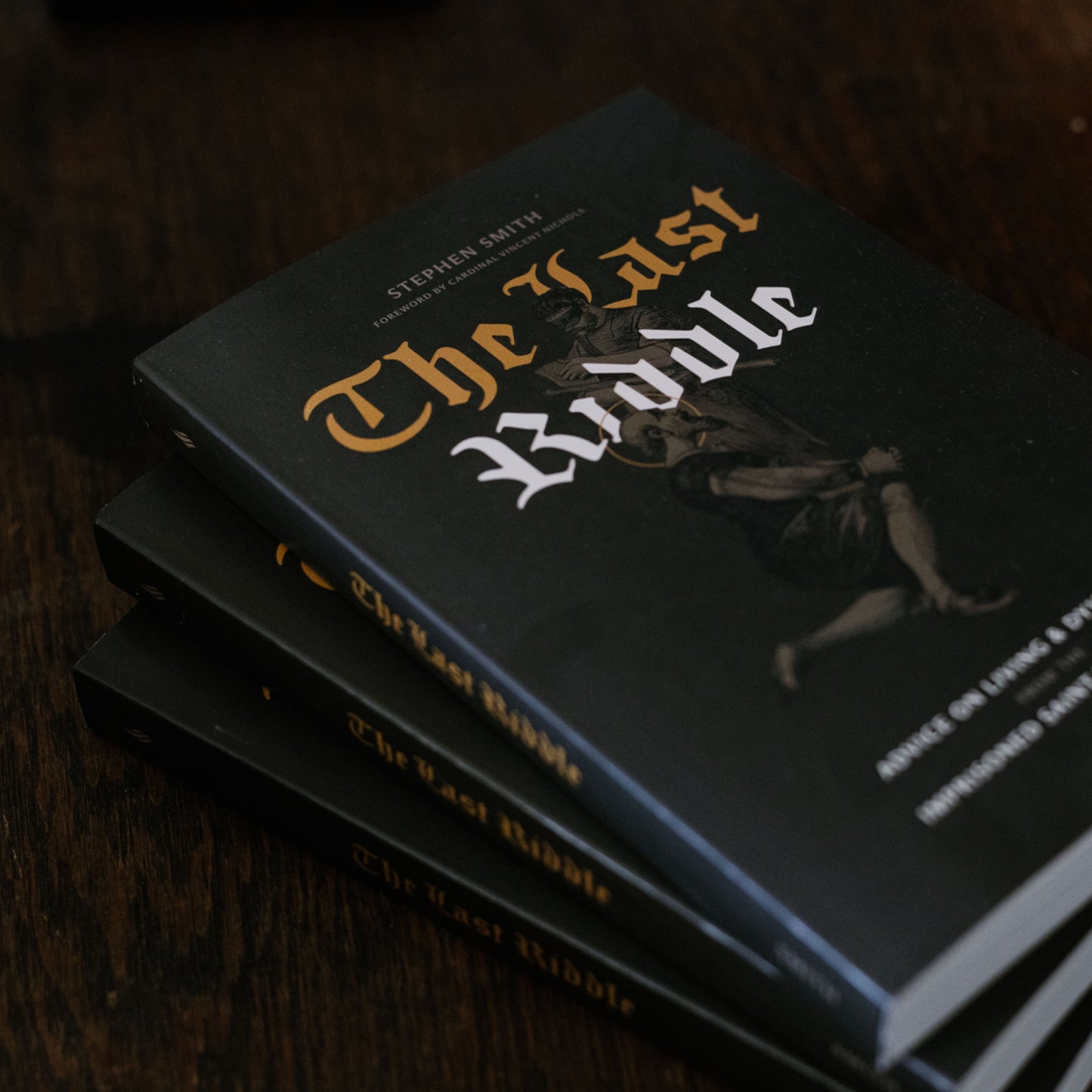
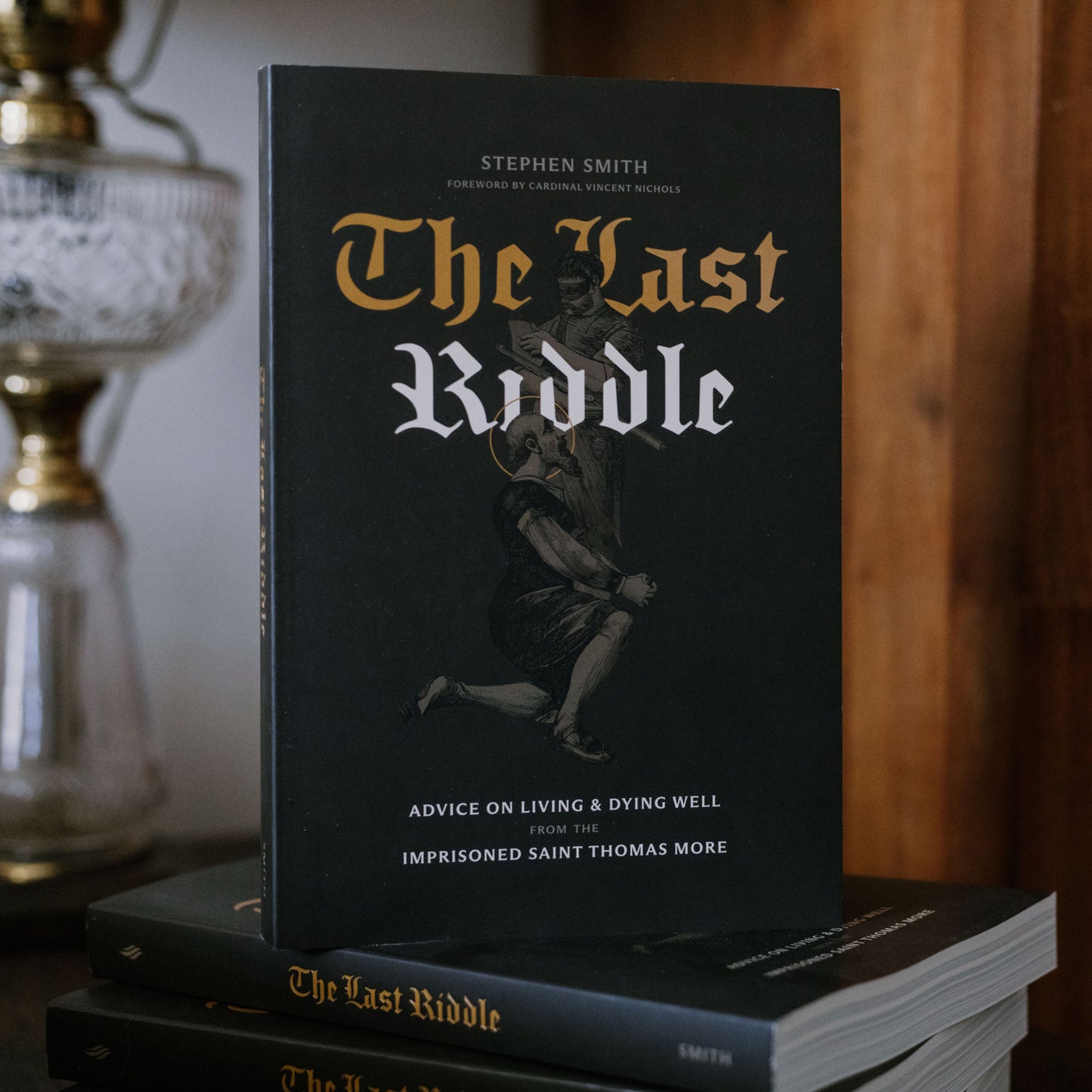
Table of Contents

What People are Saying

“This remarkable book contains the last will and testament of one of the greatest saints of his time: Saint Thomas More. He is a compelling role model not only for all those in positions of authority—it is no accident that Pope Saint John Paul II declared him the patron of politicians—but for anyone facing difficult decisions on matters of conscience. He shows that we can endure great adversity, even death itself, and yet come to fulfillment.”
—Cardinal Vincent Nichols, archbishop emeritus of Westminster, from the foreword

“The greatness of Thomas More is apparent to anyone who watches the play or movie A Man for All Seasons or who reads his prison treatise, A Dialogue of Comfort Against Tribulation, or the Tower letters. Stephen Smith, one of our finest teachers at Hillsdale, has spent his life studying the man, and he writes about him with penetration and grace.”
—Larry P. Arnn, president, Hillsdale College

“A superb compilation of and commentary upon the final letters and prayers of Sir Thomas More. Betrayed, ruined, imprisoned, and racked by his own unbreakable conscience, More awaits execution with a magnanimity that is deeply challenging, deeply moving. Smith’s Last Riddle, like Lewis’s Last Battle, demands of the reader a fresh reckoning with the truth that all lives draw to an end and noble death is a treasure that no one is too poor to buy.”
—Michael Ward, associate faculty, University of Oxford, author of After Humanity: A Guide to C.S. Lewis’s “The Abolition of Man”

“With decades of reflection on these texts and in his elegantly written commentaries, Smith captures the drama and depth of More’s mind and heart precisely at More’s greatest ‘testing point.’ Through his profound expositions of Thomas More’s last letters, prayers, and speeches at trial, Smith makes accessible for us all the wit and wisdom and hard-fought-for and prayed-for virtues of this famous ‘Patron of Statesmen’—family man, professional, friend, leading citizen, humorist, defender of the faith, and saint—showing throughout how More’s example is of immense importance for our own times.”
—Gerard Wegemer, founding director, Center for Thomas More Studies

“With The Last Riddle, the reader is offered the most intimate treasures of Thomas More’s writings: his last letters and the prayers and meditations he composed while awaiting death in the Tower of London. Only by immersing ourselves in More’s own words written during the last months of his life can we begin to understand what he meant when he declared that a man ‘may lose his head and yet have none harm, but instead of harm inestimable good at the hand of God.’ With the help of Smith’s comments and historical precisions, we finally become able to solve that last riddle and share a little of the saint’s unique experience as he prepared for death. The Last Riddle is a book we might want to keep with us for many years.”
—Marie-Claire Phélippeau, president, Amici Thomae Mori

“Thomas More’s last letters and prayers rank among the masterpieces of English prose—intimate, dramatic, and spiritually profound. Smith arranges these texts chronologically, inviting readers to accompany More from the morning of his imprisonment to his final days before execution. We witness More arguing with his brilliant daughter about his conscience, challenging a wavering friend, defending himself under intense interrogation, and praying for his enemies. Smith’s commentary traces how More’s last writings are as much about living well as facing death. Wisdom for all seasons.”
—Travis Curtright, author of The Controversial Thomas More: Politics, Polemics, and Prison Writings