


Majesty and Beauty
Majesty and Beauty
The Basilica of San Clemente and Its Underworld
Couldn't load pickup availability
The Basilica of San Clemente is a short walk from the Colosseum in Rome, and over the centuries, it has drawn countless pilgrims and visitors. But in the middle of the nineteenth century, it captured the astonished attention of the whole world when a forgotten fourth-century basilica was unearthed beneath it—and, under that, even lower down, a pagan temple dedicated to the god Mithras.
In Majesty and Beauty, Paul Murray, OP, uncovers for us, layer by layer, the story of this basilica, one of Rome’s most beautiful and important churches. It is a story constructed in stone and art, from Mithraic temple to early Christian basilica to the present living place of worship—a place universally celebrated for its magnificent twelfth-century mosaic.
Throughout these pages, the author invites his readers to set out with him on a journey of discovery into the lost and found worlds of San Clemente’s pagan and Christian past. Majesty and Beauty is a work of artistic and spiritual adventure, distinguished throughout by a fine grasp of the latest scholarship and by truly stunning images of the works of art in the basilica, presented in full and splendid color.
More Info
More Info
Share
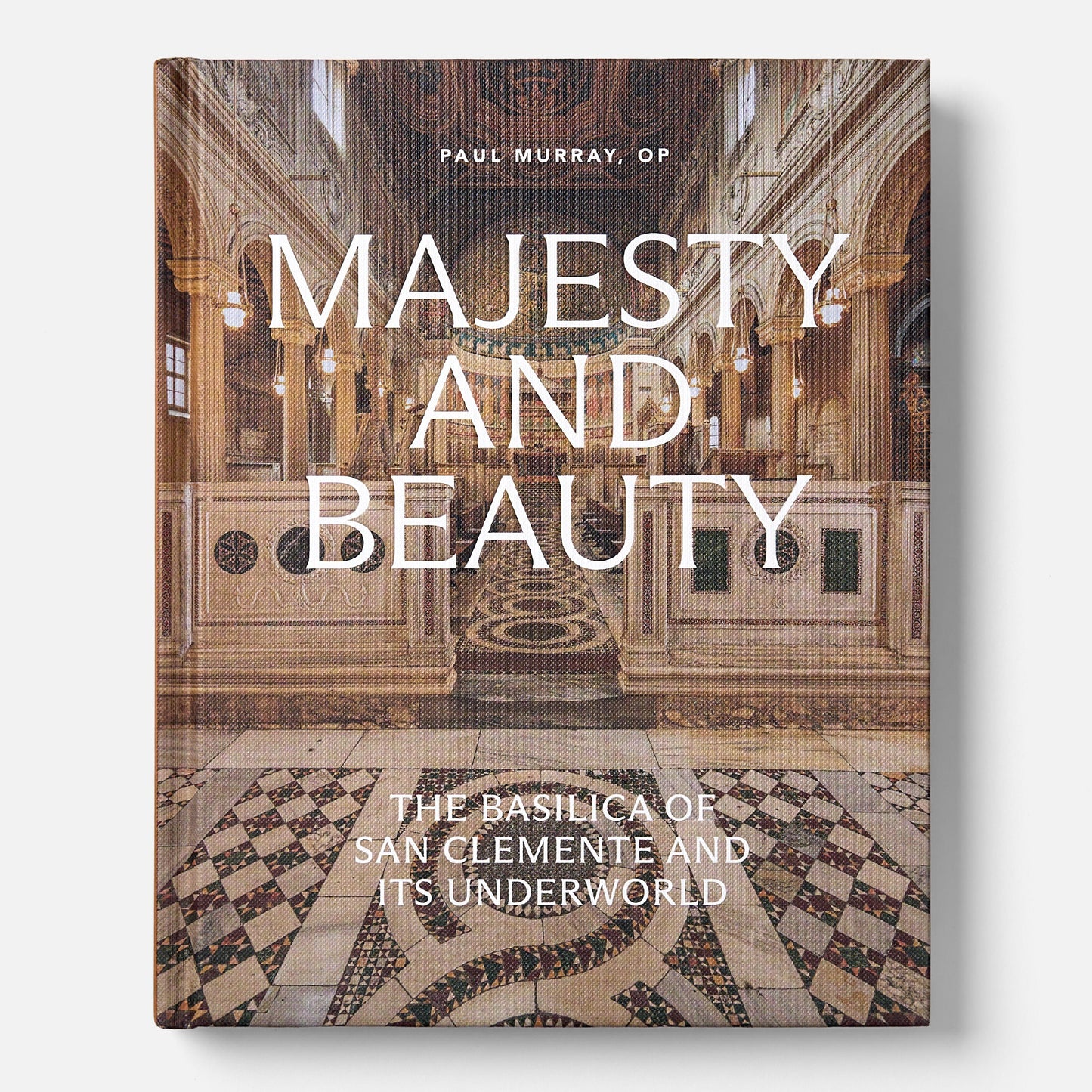
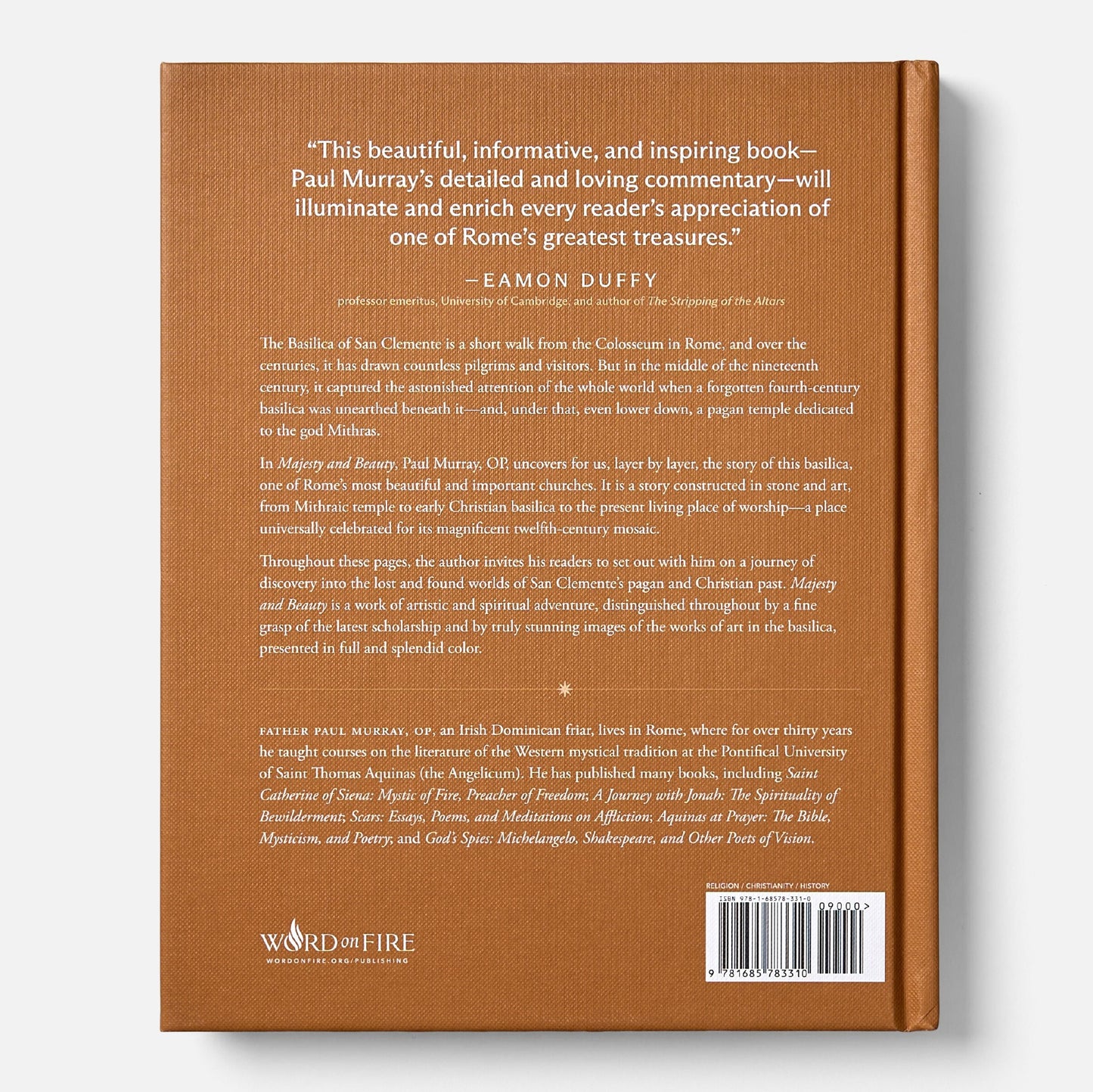
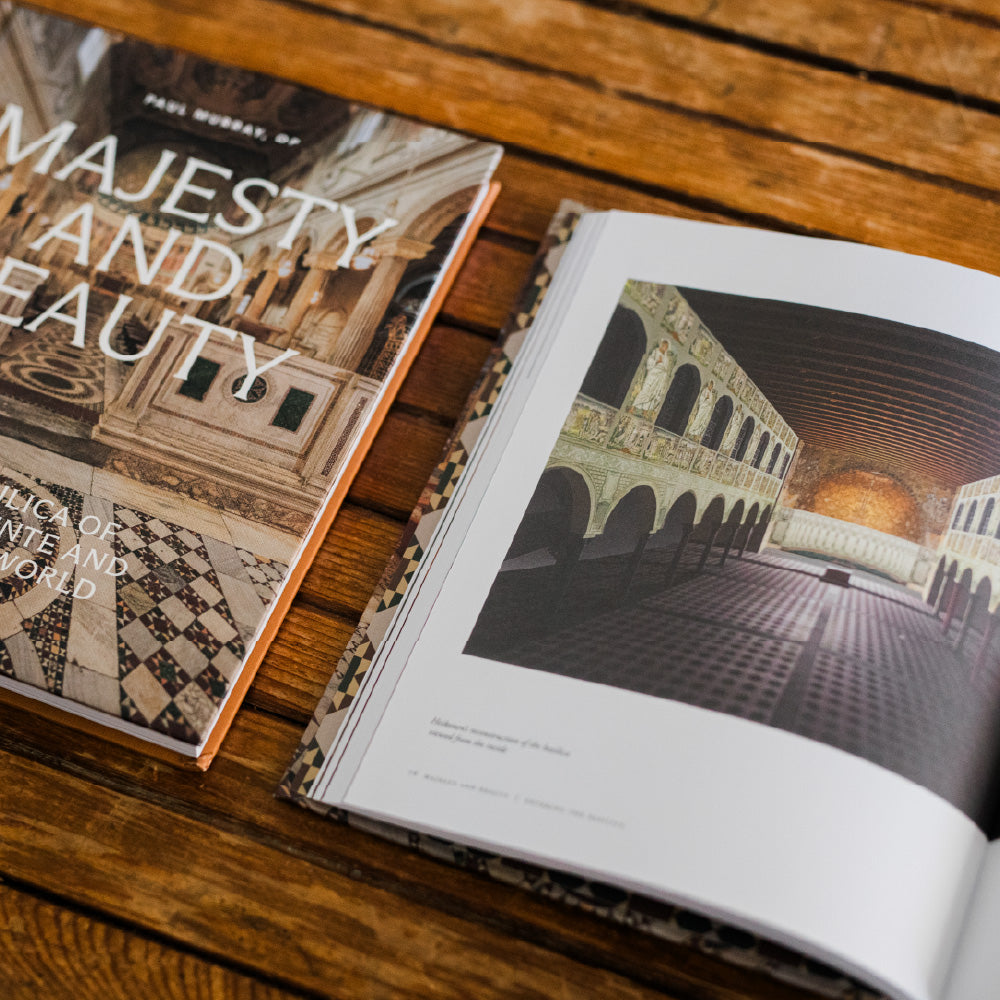
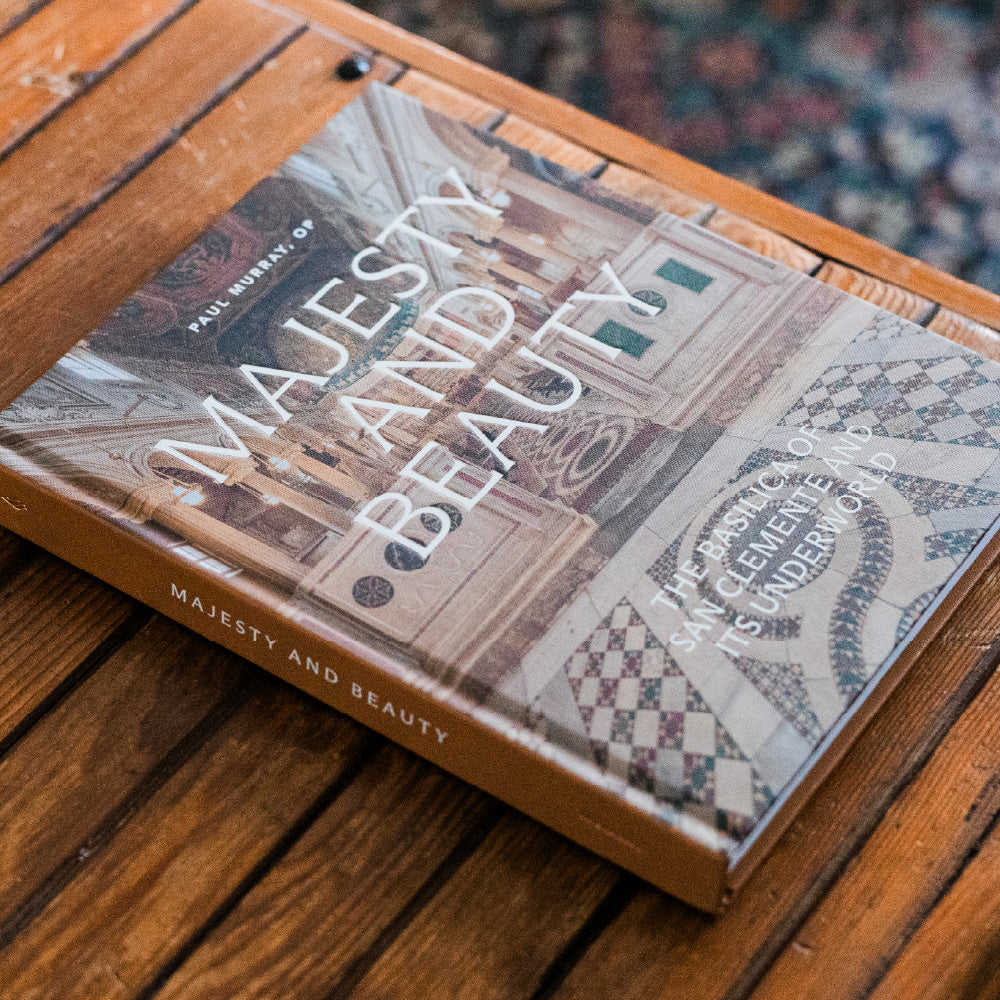
Table of Contents

What People are Saying

“The Basilica of San Clemente, with its white marble choir, Renaissance frescoes, and spectacular apse mosaic, has long been known as one of Rome’s most beautiful and evocative buildings. But in the nineteenth century, a self-taught priest-archaeologist, Father Joseph Mullooly, conducted the epic excavation that revealed it to be a virtual time machine, whose layer upon layer vividly embodies two millennia of human history. This beautiful, informative, and inspiring book—Paul Murray’s detailed and loving commentary—will illuminate and enrich every reader’s appreciation of one of Rome’s greatest treasures.”
—Eamon Duffy, professor emeritus of the history of Christianity, University of Cambridge, and author of The Stripping of the Altars: Traditional Religion in England, 1400–1580

“San Clemente is simply the most fascinating church in Rome; apologies, Saint Peter’s, but it’s true! To do justice to the story of this rich, complex building demands a deep knowledge of history, archaeology, art, architecture, theology, and prayer; it also needs a thorough grasp of a wide range of scholarly debates. Father Paul Murray, OP, combines all these with an intimate understanding of the place. He tells a story full of surprises, from the rediscovery of the hidden basilica in the mid-nineteenth century to the finding of a lost pagan medallion only last year. Father Paul’s elegant prose is complemented by a stunning set of illustrations. This is a book to cherish—not only the definitive new guide to this wonderful basilica but a gift for anyone interested in the living history of the Church.”
—Sister Margaret Atkins, Augustinian canoness at Boarbank Hall and research fellow of Blackfriars Hall, Oxford

“The Basilica of San Clemente is one of those keys to understanding the city of Rome and how the Eternal City has ebbed and flowed during the Christian period. This fine book by Paul Murray, OP, a Dominican friar who lives at San Clemente, explains the three major levels of the basilica: First, a pagan Mithraeum was built; later, a fifth-century church was constructed on top of it; finally, that basilica was filled in and built upon with a new basilical church in the twelfth century. Terrific photos of the building, artistic and architectural details, and recent reconstructions of the earlier church help Father Paul tell the story.”
—Duncan G. Stroik, architect and professor, University of Notre Dame

“No one who sees the Roman basilica of San Clemente, five minutes’ walk from the Colosseum, is likely to forget it. But the more visitors know about what they see, the more intense will be their memories. The history of this site is a long one—roughly two thousand years—and the art, both architectural and decorative, is uncommonly rich and fascinating, even for Rome. This is a book-length modern account of San Clemente’s artistic and historical treasures, together with its archaeological record. It is an indispensable guide for those who intend to visit the basilica or a record for those who have already done so. A real need is now filled, for those who read English, by the scholarly work of Father Paul Murray, OP, who knows intimately every corner of San Clemente.”
—Margaret Visser, author of The Geometry of Love

“The Basilica of San Clemente is my favorite church in Rome. From ancient times, it has exemplified the sacramental character of sacred beauty and the mediating role of sacred architecture in pointing to the holiness of God. Author Father Paul Murray, OP, who resides at the basilica, does a masterful job in drawing the reader into its pagan and Christian past, and into the sacred art and architecture that challenge us to lift our eyes, look beyond this world, and glorify God with a corresponding beauty in the soul.”
—Archbishop Salvatore J. Cordileone, archbishop of San Francisco

“Architecture, like sculpture, creates beauty in three dimensions, yet it differs in that we enter and inhabit the artwork itself. Father Paul Murray’s perspective on the Basilica of San Clemente, informed by daily prayer within its walls, is therefore invaluable. A tourist can scarcely take in the full depth of such an iconic basilica, but Majesty and Beauty helps present its spiritual and aesthetic richness for those who cannot experience it in their daily lives.”
—Father Sam Florance, FSSP, RA (registered architect)